Welcome to WordPress. This is your first post. Edit or delete it, then start writing!
Category: Uncategorized
-
What is saram – Swar Vigyan: Ancient Breath Science from Saram’s Whisper by Vedhan Sri
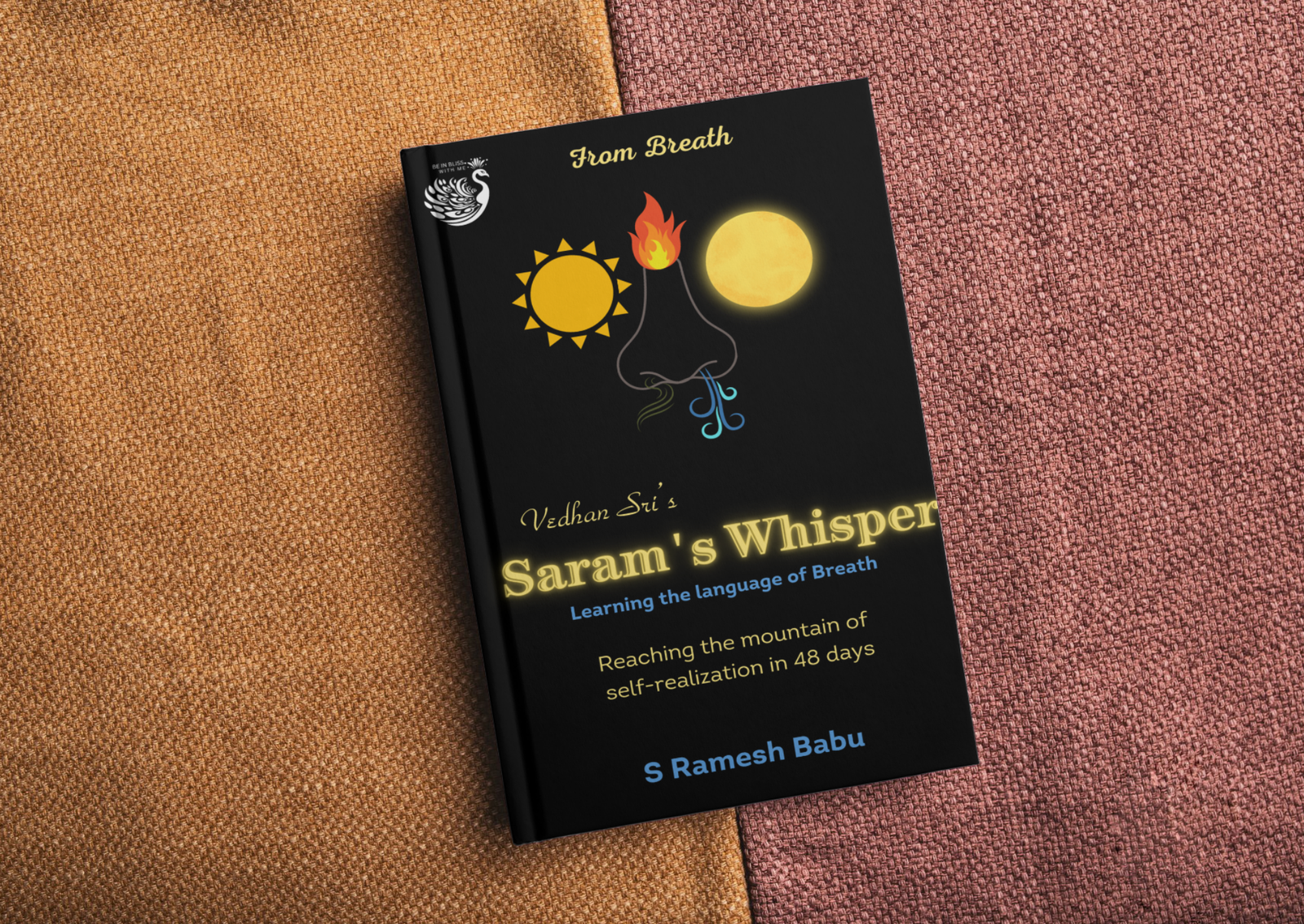
Manifest Your Dreams with Breath: The Science of Swar in Vedhan Sri’s Saram’s Whisper
Breath is not just air—it’s your guide, your timing, your gateway to destiny.
For centuries, spiritual masters and enlightened beings have accessed a hidden code embedded within breath—a system known in ancient India as Swar Vigyan, or the Science of Swara. Now, Vedhan Sri’s Saram’s Whisper brings this ancient wisdom to the modern seeker, offering practical techniques to harness the power of breath and manifest a life of clarity, success, and inner joy.
What is Swar Vigyan?
Swar Vigyan, as introduced in Saram’s Whisper, is the sacred art of tuning into your breath to align with cosmic rhythms. Every moment, one of your nostrils dominates—either the left (Ida) or the right (Pingala). This subtle shift determines how your energy flows, your decisions unfold, and your body responds.
“Your Swara is your strategy. Every breath reveals the right time to act, rest, love, heal, or even buy gold.” — Vedhan Sri
The Dual Forces of Life: Ida & Pingala
-
Ida Swara (Left Nostril – Lunar): Governs inner work, emotional healing, and cooling. Perfect for meditation, counseling, energy healing, and sleep.
-
Pingala Swara (Right Nostril – Solar): Drives external action, clarity, and vigor. Ideal for business deals, speaking, travel, and physical activity.
Breath Techniques Shared in Saram’s Whisper
1. Swar Chintan (Breath Awareness Practice)
Daily observation of breath reveals your current Swara. This self-awareness, as explained in the book, empowers better decision-making by aligning action with energy.
2. Surya Bhedana & Chandra Bhedana
These breathing techniques selectively activate Pingala or Ida respectively. You’ll learn when to switch your breath before exams, negotiations, healing sessions, or important life events.
3. Nadi Shodhana (Alternate Nostril Breathing)
This ancient method balances both Swaras. Practiced regularly, it purifies the mind-body network and helps one stay calm, centered, and decisive.
4. Bhastrika (Bellows Breath for Activation)
Used for energizing your system before action or when clarity and motivation are low. In Saram’s Whisper, you’ll discover how and when to apply it to influence breath-driven outcomes.
Scientific Echoes of Ancient Truth
Modern studies in nasal cycle and lateral brain function echo the insights of Swar Vigyan. Left nostril breathing stimulates the parasympathetic nervous system, enhancing calm and restoration. Right nostril breathing activates the sympathetic system—fueling focus and action. (Source: Journal of Alternative and Complementary Medicine, 2013)
Why Read Vedhan Sri’s Saram’s Whisper?
-
It’s the first modern guide to decoding Swara for daily success.
-
It includes step-by-step practices to manifest health, love, wealth, and clarity.
-
It’s rooted in ancient Siddha wisdom but written for today’s world.
Whether you’re a spiritual seeker, a healer, or someone simply looking to live better—this book will become your lifelong companion.
-
-
The Breath Behind Yoga: How Saram (Swara Sastra) Unlocks Deeper Mastery of Mind and Body
The Breath Behind Yoga
How Saram (Swara Sastra)
Unlocks Deeper Mastery of Mind and Body
1. Breath: The Foundation of All Yoga
The Hatha Yoga Pradipika (Chapter 2, Verse 3) declares:
“As long as there is breath in the body, there is life. When breath departs, so does life. Therefore, regulate the breath.”
Without conscious breath control, no deep yoga progress is possible. Pranayama (controlled breath) is called the fourth limb of Yoga in Patanjali’s Yoga Sutras.
Yet ancient masters went even deeper. Saram, the science of Swara (breath current), teaches that left, right, and both nostrils govern different forces of life.
What is Saram (Swara Sastra)?
-
“Saram” means uninterrupted subtle flow (of energy, air, consciousness).
-
In Swara Sastra, the nostril through which the breath is predominantly flowing (called Swara) at any moment determines the success or failure of our actions.
-
The breath alternates between nostrils roughly every 60–90 minutes. This is called the Swara cycle.
Thus, knowing which breath is active, and aligning it with your asana, meditation, or pranayama practice, can dramatically enhance your results.
Which Breath Supports Which Yoga Practices? (As per Saram)
4. How to Check and Shift Your Swara for Yoga
To check:
-
Close one nostril lightly and breathe in.
-
Repeat on the other side.
-
The side that feels easier and freer is your active Swara.
To shift Swara naturally:
-
Lie on your side (opposite to the Swara you want to activate).
-
E.g., lie on your right side to activate the left Swara (cooling, calming).
(Ancient tip from Saram: You can also block the armpit of the active side for faster Swara change!)
5. Modern Scientific Research Supporting Breath Control in Yoga
Modern science now validates what ancient yogis knew.
-
A study in International Journal of Yoga (2013) found that left nostril breathing significantly reduced blood pressure and heart rate, inducing relaxation (Parasympathetic activation).
-
A 2020 meta-analysis published in Frontiers in Psychology confirmed that alternate nostril breathing improves attention, stress resilience, and emotional regulation.
-
Right nostril breathing (Pingala) was associated with increased sympathetic activity, leading to better focus, energy, and outward-directed tasks.
(Sources:
-
Telles et al., International Journal of Yoga, 2013
-
Balbanjan et al., Frontiers in Psychology, 2020)
-
-
Discover the Transformative Power of Breath with Vedhan Sri’s Saram’s Whisper
Breath, Journey, Enlightenment